

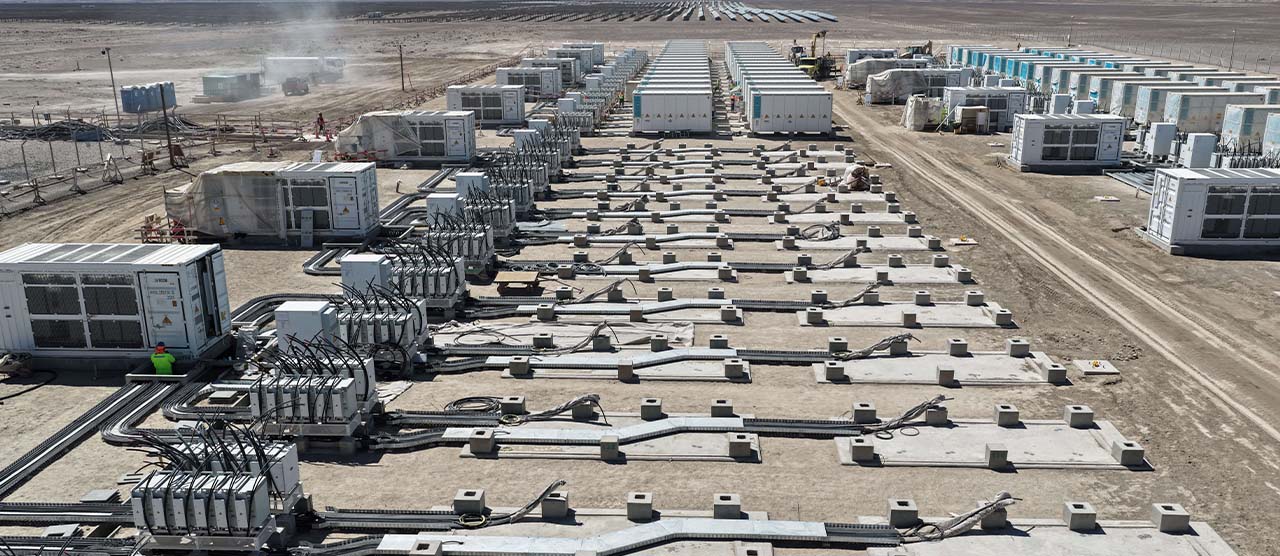
- The battery energy storage project is being developed at the Valle del Sol photovoltaic plant, a 163 MW facility that has been operating since 2023 in the municipality of María Elena, Antofagasta Region.
- The arrival of the first battery units marks a new milestone in the initiative’s development. With 147 units in total, the project will transform the site into a hybrid power plant combining solar generation and energy storage.
September 23, 2026 – Enel Chile, through its subsidiary Enel Green Power Chile, continues to advance the development of its Valle del Sol BESS battery energy storage project, which will have an installed capacity of 186 MW.
As the project progresses, the first 74 batteries for the energy storage system have arrived in Chile. These units account for more than half of the 147 batteries planned for the initiative.
This milestone represents significant progress in constructing the Valle del Sol BESS plant, which is currently approximately 60% complete. The remaining equipment, primarily related to the storage system, including inverters and transformers, has already been installed on-site.
Meanwhile, the civil works are nearing completion as the project advances toward electromechanical execution, followed by integration, testing, and commissioning.
Valle del Sol BESS will incorporate Grid Forming technology, allowing its inverters to operate like traditional power generators. This will help maintain stable grid voltage and frequency while providing the National Electric System with greater flexibility and resilience.
The initiative forms part of Enel Green Power Chile’s strategy to advance the hybridization of renewable plants by leveraging existing infrastructure and the interconnection point. Once operational, the storage system will complement generation from the Valle del Sol photovoltaic plant, transforming the site into a utility-scale hybrid facility that combines solar photovoltaic generation with energy storage at the same location.
With an annual injection capacity of 218 GWh, Valle del Sol BESS will improve the use of renewable energy generated by the complex’s solar section by storing it during periods of low demand or power-grid constraints. This will prevent curtailment at the solar plant, enabling the stored energy to be injected into the grid later, when the system needs it.
BESS systems play a fundamental role in the energy transition by enabling greater integration of renewable energy into the National Electric System, optimizing the use of clean energy produced, and reducing dependence on more emissions-intensive generation technologies.
As part of its commitment to the sustainable development of the communities where it operates, Enel promotes shared-value initiatives that strengthen local identity and create opportunities for community members.
In line with Enel’s sustainability and community engagement policy and considering the needs of the municipality of María Elena, the construction of the Valle del Sol BESS includes a lighting program for the municipality’s heritage sites and tourist attractions. The program forms part of a master plan developed collaboratively with various community organizations, helping to revitalize the area’s identity and economic activity.
It also offers an academic visit program for elementary, middle, and higher education students and teachers, who tour the facility to gain hands-on knowledge of how solar energy works. During these visits, participants use a mobile app to access educational content about this energy source and Valle del Sol’s distinctive features. They also enrich the experience with a guided on-site tour led by Enel specialists and experts.
The academic value of this program will increase significantly through the integration of the Valle del Sol battery storage system, further strengthening the considerable interest this engagement opportunity generates across the educational community.
With this initiative, Enel continues to advance innovative energy storage solutions, strengthen renewable energy integration, support an increasingly flexible, resilient, and sustainable power system, and implement its strategy of developing critical infrastructure to support the economy’s growing electrification and meet customers’ energy needs.