

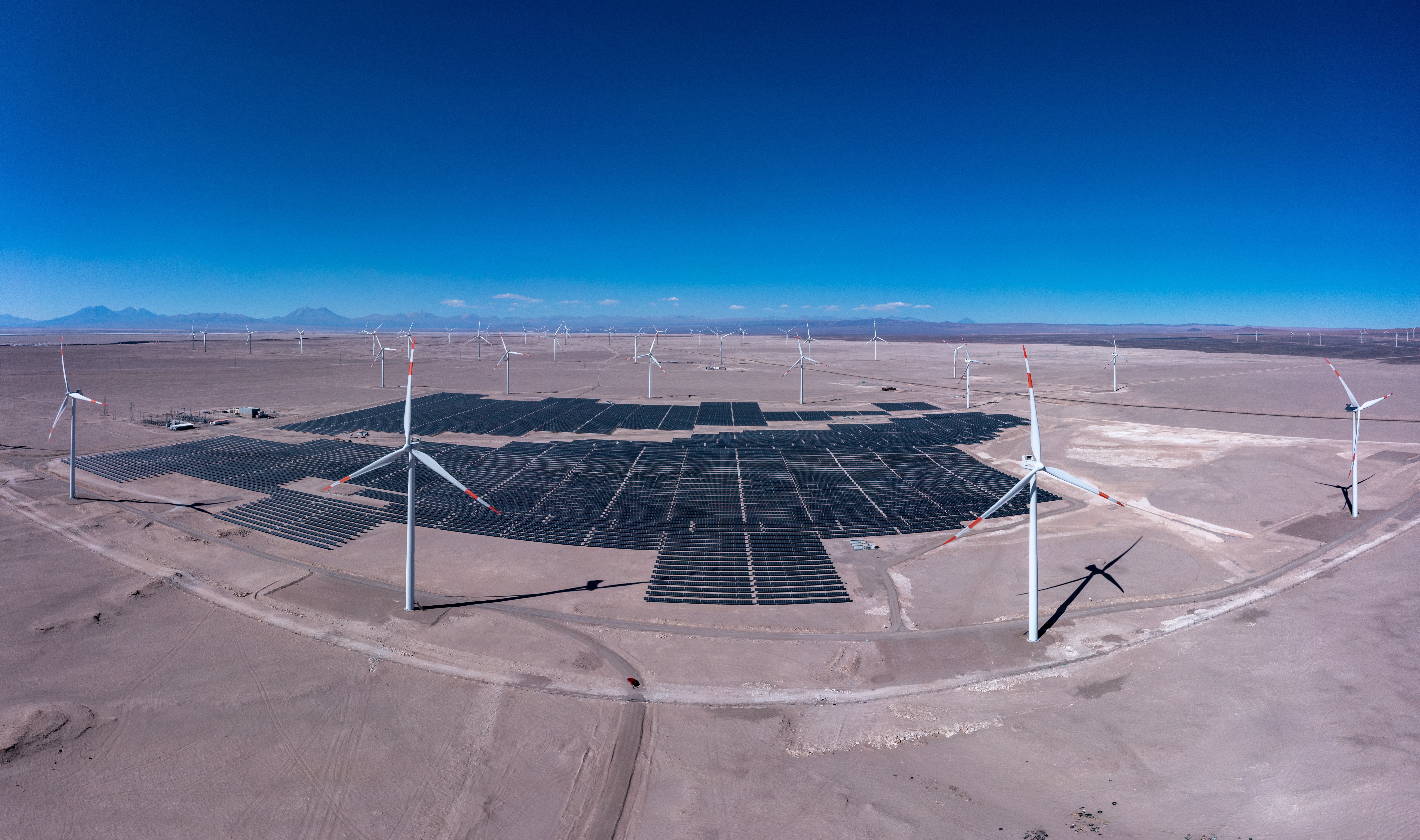
· With the integration of this system, Azabache will combine three technologies: solar, wind, and energy storage.
· The new battery energy storage system (BESS) will have an installed capacity of 94 MW and a storage capacity of 372 MWh.
April 1, 2026 – Enel Chile, through its subsidiary Enel Green Power Chile, began the construction of the battery energy storage system “Azabache BESS” in the Antofagasta Region. This project is integrated into the hybrid renewable energy plant, which will combine three technologies at the same site: solar, wind, and storage.
The system will have an installed capacity of 94 MW and a storage capacity of 372 MWh, with 36 MW available at the Valle de los Vientos Wind Power Plant and 58 MW at the Azabache Photovoltaic Plant.
With an annual storage capacity of 136 GWh, Azabache BESS is equivalent to 10% of the volume of the Pangue hydroelectric dam, one of the largest hydraulic infrastructures in the country, capable of storing 175 million cubic meters (175 Hm³).
This initiative joins the BESS Las Salinas project, which began construction in November 2025, also in the Antofagasta region.
BESS systems play a key role in the electricity generation chain, as they allow for shifting the production curve of renewable sources, ensuring efficient delivery when the system requires it.
Stored energy can be injected during hours without transmission restrictions, ensuring reliable operation and reducing dependence on thermal plants, which prevents greenhouse gas emissions and promotes a cleaner and more sustainable system.
In line with its Sustainability and Community Engagement policy, Enel Green Power will implement training programs to develop local labor during the construction phase, as well as educational initiatives and activities aimed at conserving the heritage and culture of Calama and its surroundings.
The commissioning of Azabache BESS represents a milestone in Enel's hybridization strategy, reaffirming its commitment to the country's decarbonization and the efficient integration of renewable energies, strengthening the security and stability of the national power system.